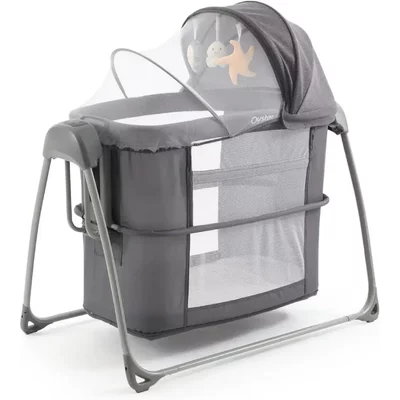
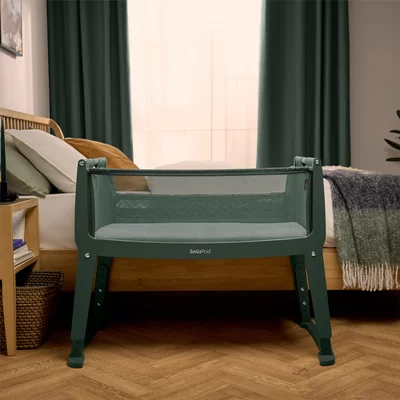
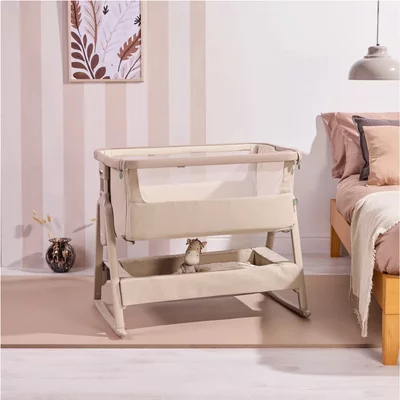
“Wooden crib” can describe quite different products: a traditional crib with wooden bars, a fabric bassinet on a wooden stand, or a bedside crib with wood-effect parts. Establish which type you are comparing before judging its size or features.
Three designs, three different questions
| Design | Question to resolve |
|---|---|
| A traditional wooden crib | What exact mattress and base configuration does its manual specify? Is it fixed, rocking or swinging? |
| A bedside design with a wooden frame | Does it attach to your adult bed, and what does the manual require for its side panel? The SnuzPod4 guide discusses its different modes. |
| A crib with a cot conversion | Are the complete later-stage parts and mattress available? Read the Shnuggle Air conversion guide before treating conversion as an automatic saving. |
Size and condition matter more than the finish
Measure the assembled outside footprint, not just the mattress. Allow room for any permitted movement and for an adult to reach the baby. On a used example, identify the model and examine the fittings, frame and finish; ask the manufacturer about damage or replacement parts instead of improvising a repair.
Keep the mattress arrangement simple
The Lullaby Trust recommends a firm, flat mattress and a clear sleep space. Wood, mesh or a natural finish is not evidence that a crib prevents SIDS. Extra pillows or bumpers do not make a frame a better sleep space.
What happened to the old shortlist?
Its scores and offers were not supported by current checks, so this guide does not repeat them. A useful shortlist needs an identifiable model, available instructions, confirmed mattress fit and a dated offer, rather than a collection of attractive nursery photographs.
Sources: lullabytrust.org.uk ↗ · shnuggle.com ↗ · snuz.co.uk ↗